Invited Talks

Track : Invited Plenary Talk

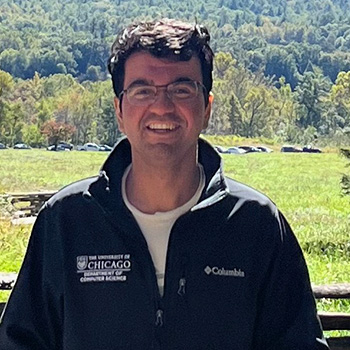
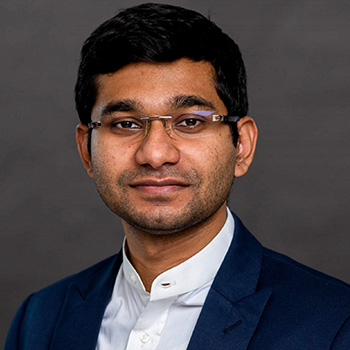
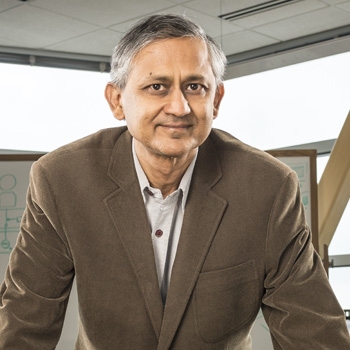
Amit P. Sheth

University of South Carolina

Beyond LLMs and BigAI: The Future of Enterprise AI is C3AN --custom, compact, composite, and neurosymbolic

Abstract: As generative AI matures, the industry is shifting from monolithic, general-purpose models toward modular, intelligent systems designed for real-world deployment. These next-generation solutions to meet the demands of mission-critical enterprise applications. In this context, the attention is shifting from Big AI (expensive to train, expensive to use LLMs, with significant deficiencies such as hallucinations or confabulations) to Small AI (SLMs that are more intelligent, robust and trustworthy).

This talk introduces the C3AN framework—a synthesis of Custom, Compact, and Composite AI with hybrid agents, underpinned by Neurosymbolic techniques—as a blueprint for building the next wave of robust and trustworthy Small AI systems.

  • Custom emphasizes the use of curated, domain-specific data and workflows to ensure alignment with specific enterprise goals.
  • Compact highlights resource-efficient models that achieve strong domain and task specific performance without relying on massive scale.
  • Neurosymbolic approaches combine neural learning from data with the use of symbolic knowledge that capture rules, guidelines, regulations, and values associated with the domain, human users and society.
  • Composite refers to multi-component AI systems that integrate learning, reasoning, and human feedback through hybrid components.

The C3AN platform is built to create and evaluate the models and composite AI applications efficiently. We illustrate C3AN with a subset of real-world enterprise-class and/or mission-critical applications in health, nutrition, manufacturing and finance, along with insights on evaluating such AI systems. Further details are in the IEEE Internet Computing article, C3AN Web Site, and Neurosymbolic AI web page.
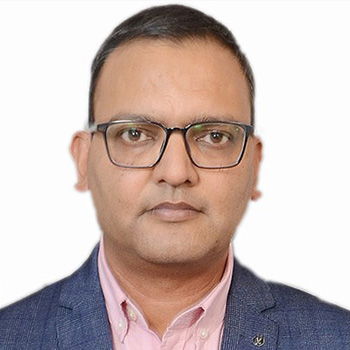
Track : AI for Earth Sciences

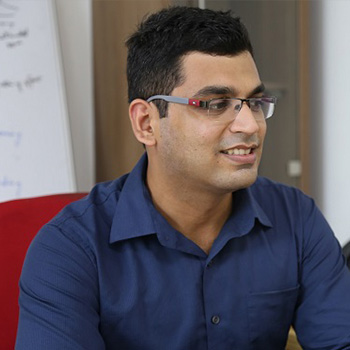
Nipun Batra

IIT Gandhinagar

AI From Space to Policy: Scientific Advances in Brick-Kiln Detection and Compliance

Abstract: Brick kilns are a major source of particulate emissions across the Indo-Gangetic Plain, yet national-scale monitoring remains scientifically challenging due to sparse field data, heterogeneous kiln designs, and the limited spatial resolution of freely available satellites. In this talk, I present a workflow for large-scale brick-kiln detection using Sentinel-2 imagery. The work combines robust dataset construction, geometric annotation protocols, domain-adapted object-detection models to produce accurate, high-recall kiln maps at continental scale. I will discuss scientific challenges in EO-based industrial monitoring: label noise, seasonal variation, cluttered backgrounds and how domain-specific model design and active data curation improve generalization across states and years. Finally, I highlight how these AI-derived kiln inventories support empirical air-quality modeling and compliance analysis, demonstrating a path from satellite pixels to actionable environmental policy.

Manish Modani

NVIDIA

Accelerating Weather and Climate Research with Generative AI

Abstract: This talk explores how Generative AI (GenAI) is reshaping AI for Science by accelerating discovery through advanced AI-driven workflows. GenAI is driving rapid breakthroughs across a wide range of scientific fields—from drug discovery and materials research to astronomy and climate science. We will highlight several notable advancements, including contributions recognized in the ACM Gordon Bell Special Prize for Climate Modeling, where GenAI-enhanced methods have delivered significant progress. The session will also cover Nvidia Earth-2 and Climate-in-a-Bottle, initiatives that exemplify the next generation of AI-driven climate simulation. Collectively, these developments illustrate how AI-enabled workflows are redefining scientific computing and opening new pathways for innovation, precision, and interdisciplinary collaboration.

Bipin Kumar

IITM Pune

Hyperlocal Precipitation Forecasting: Needs and New Pathways Forward

Abstract: Policymakers and stakeholders increasingly require precipitation information at exact locations rather than coarse grids. Generating full sub-kilometer datasets produces vast, largely unused data volumes. This talk first provides an overview of AI-based downscaling techniques for precipitation estimation. It then introduces a novel Deep Neural Network (DNN) framework that delivers on-demand forecasts at a desired location. Two DNN architectures are developed, one using precipitation, elevation, and coordinates; the second enhanced with additional meteorological data, trained on 40 years (1980–2019) of data and validated independently. Both substantially outperform traditional Kriging methods in correlation, RMSE, bias, and skill scores while running quickly to provide information on any given location.

Shruti Upadhyaya

IIT Hyderabad

Bridging Accuracy and Insight: The Significance of Explainable AI in Hydro-Meteorological Applications

Abstract: Advances in remote sensing and artificial intelligence have opened new frontiers for understanding and forecasting hydrometeorological processes. While state-of-the-art AI methods can significantly improve predictive skill, their limited interpretability often restricts their adoption within operational meteorological agencies. A key challenge is understanding how these models learn from observations and what they reveal about underlying physical processes.

This talk highlights the growing importance of Explainable AI (XAI) in hydro-meteorology, with a focus on both global and local interpretability approaches. It will discuss post-hoc explanation techniques, demonstrate their utility in diagnosing model behavior, and illustrate their potential through diverse case studies in hydro-meteorology. By integrating XAI with traditional hydro-meteorological knowledge, the talk emphasizes pathways to improve trust, transparency, and operational transition of ML-based forecasting systems.

Kamal Das

IBM Research

The Rise of Geospatial Foundation Models for Earth Observation

Abstract: Significant progress in developing highly adaptable Geospatial Foundation Models (GFMs) is set to revolutionize Earth science and remote sensing, enabling generalist AI to leverage multi-sensor geospatial data. While GFMs are typically trained on vast global satellite mission datasets, little attention has been given to region-specific data. This talk will present Prithvi, a pioneering IBM/NASA collaborative GFM. Prithvi, a 100-million parameter Vision Transformer (ViT) pre-trained on 1 terabyte of Harmonized Landsat-Sentinel 2 (HLS) imagery, is being critically extended for the Indian region by incorporating multi-modal Indian Satellite data (SAR + Optical) to create a truly regional GFM.

The core of the presentation will demonstrate Prithvi's practical use cases across the Indian region in two high-impact downstream applications: (a) Flood Monitoring and (b) Crop Identification. A major contribution is the first-ever AI-ready processing and integration of ISRO satellite data for multi-modal feature input. This work serves as a powerful, practical example of domain adaptation, showcasing how tailoring global foundation models with high-quality regional observations is essential for addressing critical local environmental and agricultural challenges effectively.

Track : Early Career Highlights

Saurav Prakash

IIT Madras

Efficient Solutions for Machine Learning and Unlearning at the Edge

Abstract: The proliferation of edge devices offers a powerful, decentralized AI ecosystem. Yet, privacy constraints prevent data sharing across clients, and device resource limitations hinder deployment of large-scale models. In this talk, I will present novel methods for efficient, privacy-preserving machine learning tailored to heterogeneous edge settings. I will also introduce my recent work on exact machine unlearning in the context of federated clustering, providing a formal and auditable way to remove the influence of specific data points, as required by emergent privacy regulations.

Procheta Sen

University of Liverpool

Exploring LLMs for Social Good: From Use Cases to Mechanistic Insights

Abstract: This talk will explore the dual objectives of applying and interpreting large language models (LLMs) for socially beneficial outcomes. The first part of the presentation will focus on a case study on automated attribute extraction from criminal case proceedings, casting the task as a few-shot sequence labeling problem. Leveraging LLMs, tis work will demonstrate that structured representations of legal texts substantially improve processing efficiency and enhance performance in downstream tasks such as legal judgment and statute prediction.

Shifting focus to model behavior, the next part will focus on investigating how social and demographic biases are encoded within the internal structures of models like GPT-2 and LLaMA-2. Employing mechanistic interpretability techniques, specific components responsible for biased outputs and assess their stability and generalizability across tasks and fine-tuning settings are identified. Analysis reveals that such biases are often localized to particular layers and that their removal, while reducing bias, may inadvertently impair broader language understanding capabilities. Collectively, these contributions underscore a unified research agenda that advances the practical deployment of LLMs in high-stakes domains while promoting transparency, fairness, and interpretability.

Arjun Bhagoji

IIT Bombay

Towards Machine Learning Models Robust to Evolving Adversaries

Abstract: Robust training methods typically defend against specific attack types, such as Lp attacks with fixed budgets, and rarely account for the fact that defenders may encounter new attacks over time. One solution is to train the model to be simultaneously robust against all anticipated attackers. However, this is usually not possible in practice. A natural solution, then, is to adapt the defended model to new adversaries as they arise via fine-tuning, a method which we call continual robust training.

However, when implemented naively, fine-tuning on new attacks degrades robustness on previous attacks. This raises the question: how can we improve the initial training and fine-tuning of the model to simultaneously achieve robustness against previous and new attacks? We present theoretical results which show that the gap in a model's robustness against different attacks is bounded by how far each attack perturbs a sample in the model's logit space, suggesting that regularizing with respect to this logit space distance can help maintain robustness against previous attacks. Extensive experiments on multiple datasets and over 100 attack combinations demonstrate that the proposed regularization improves robust accuracy with little overhead in training time. Our findings lay the groundwork for the deployment of models robust to evolving attacks.

Vidhya Kamakshi

National Institute of Technology Calicut

LENS – Learning Explainable Neural Speech

Abstract: Speech is a natural mode of human communication, making its accurate and fair interpretation essential for inclusive AI. While deep learning has significantly advanced speech processing, the opacity of such models raises concerns about trust, fairness, and accountability, especially in safety-critical domains. This work examines key challenges—robustness, inclusivity, and transparency—and surveys emerging intersections between speech processing and Explainable AI (XAI). It highlights promising directions such as model editing, cross-modal alignment, explanation evaluation, and interpretable architecture search, calling for deeper collaboration to create accurate, fair, and trustworthy speech systems.

Krishna Pillutla

IIT Madras

Towards provably privacy-preserving AI in the era of foundation models

Abstract: While foundation models and LLMs unlock new and unprecedented AI capabilities, they come with a substantially increased risk of memorising, regurgitating, and leaking privacy-sensitive data. Differential privacy, now a well-established standard for privacy protection, provides a principled solution to prevent such leakage, but is often computationally expensive (for good performance). I'll present some of our work on developing efficient and scalable algorithms AI inference and fine-tuning to make differential privacy practical in the era of foundation models.

Anirbit Mukherjee

The University of Manchester

Foundations of Machine Learning in Infinite-Dimensions

Abstract: An ongoing revolution in machine learning is about being able to set up neural systems that can approximate maps between Banach spaces. One of the popular such setups is that of Deep Operator Nets (DeepONets). These can be trained to discover approximations to the entire solution space of PDEs over varying parameters and some variants of these can also solve for dynamical systems like the weather, which do not have an underlying analytic description. Despite the basic idea being known since decades, its only recently that the foundations of this methodology have begun to be discovered - coupled to the increasing ease of deploying these models in the wake of GPUs becoming widely available. Our group has obtained the first neural net size-independent generalization error bounds for DeepONets and lowerbounds on their size requirement for good performance. We will briefly introduce these results and outline future directions in this exciting field of machine learning in infinite-dimensions.

Raunak Bhattacharyya

IIT Delhi

Towards Safety-Aware Autonomous Navigation

Abstract: Safe autonomous navigation lies at the heart of deploying robots in the real world. Whether guiding self-driving cars through traffic or mobile robots through dynamic indoor spaces, the challenge is the same: perceive the world, predict how it might evolve, and choose actions that avoid harm while still making progress toward a goal. This demands robustness to uncertainty, an understanding of environmental affordances, and principled ways to reason about risk. In this talk, I will present some of our ongoing work on safe reinforcement learning and eliciting safety guidance from foundation models for safe autonomous navigation.

Riya Samanta

Techno India University, Kolkata, India

Skill-Oriented Task Assignment in Crowdsourcing: Efficiency, Stability, and Sustainability

Abstract: This talk presents a unified overview of my research on skill-oriented task assignment in crowdsourcing, focusing on efficiency, stability, and long-term sustainability. My work introduces a suite of data-centric frameworks that address persistent challenges in crowdsourcing—skill mismatch, unstable allocations, workforce imbalance, and deployment at scale.

I first discuss skill-aware and willingness-driven allocation models (SWill-TAC and i-VTM/a-CSF) that incorporate multi-skill alignment, spatio-temporal availability, and adaptive time-slot matching to improve collaborative task success. To support sustainable workforce engagement, the SATA-PAW framework balances expertise and participation diversity, evaluated using both real and GAN-generated datasets. Stability is ensured through SoSTA, which integrates bidirectional preferences and extends deferred acceptance under skill and budget constraints to eliminate blocking pairs.

To enable real-world deployment, I propose fog-assisted and serverless architectures for low-latency, scalable task assignment, complemented by CTG-KrEW, a conditional GAN for generating realistic, skill-structured synthetic data.